Leeds Trials New Thermal Pothole Repair System
March 20, 2026City explores innovative methods to improve road maintenance
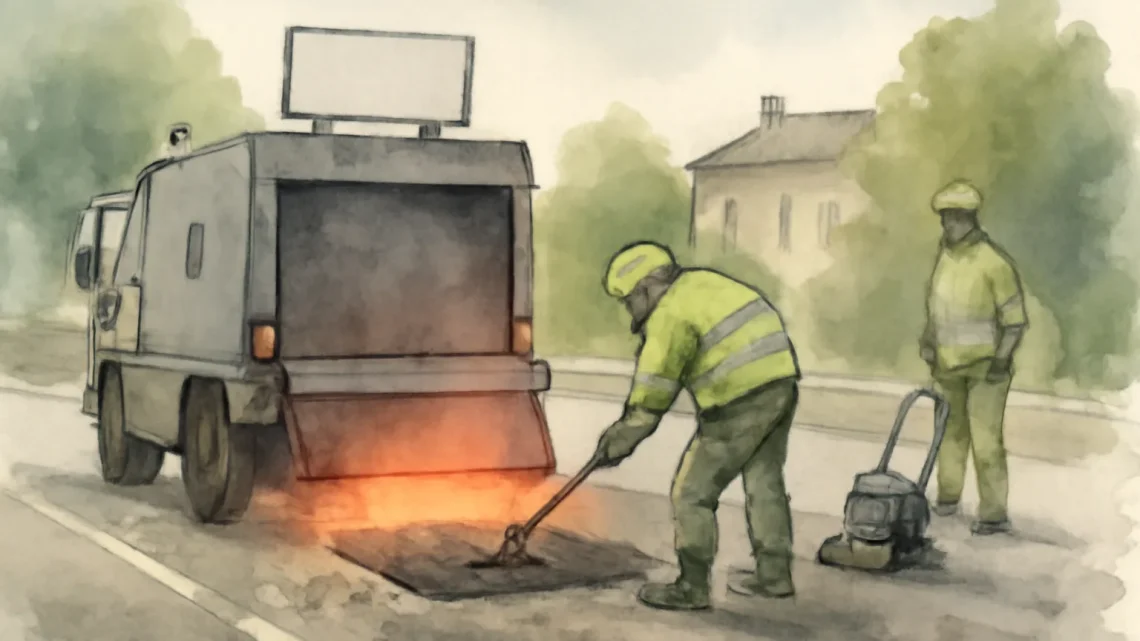
Leeds City Council has begun trials of a third pothole repair system as part of ongoing efforts to enhance the speed, quality, and cost-effectiveness of road repairs across the city. This latest technology uses infrared heating to repair potholes by softening the existing road surface, allowing for a more sustainable and efficient repair process.
Details of the Thermal Road Repairs system
The new system employs a Thermal Road Repairs machine that heats the bitumen in the road surface using infrared technology. This process makes the asphalt malleable without burning it, enabling workers to loosen and rake the existing material. A small amount of new asphalt is then added to the mixture, which is compacted to form a seamless, waterproof repair.
Key features of the Thermal Road Repairs system include:
- Operation by a small team capable of completing repairs in under 30 minutes
- Use of approximately 85% less new material compared to traditional pothole repairs
- Significant reduction in waste production
- Noise levels kept below 80 decibels during operation
Context of the trial and previous technologies tested
This trial follows previous tests of two other pothole repair technologies: the JCB Pothole Pro, trialled in February 2026, and the Velocity pothole repair system, which was tested in late 2025. The council is evaluating all three technologies to assess their effectiveness and suitability for long-term adoption in Leeds’ road maintenance strategy.
Last year, the council’s infrastructure, investment, and inclusive growth scrutiny board received a report on the highway maintenance strategy, which highlighted a proactive approach to improving pothole repairs. This strategy was further supported in January 2026 when councillors agreed to allocate an additional £13 million for pothole repairs and £1 million for investment in new pothole repair technologies.
Council comments and next steps
Councillor Jonathan Pryor, Leeds City Council’s executive member for economy, transport and sustainable development, emphasised the importance of prioritising highway maintenance. He noted that the wet weather earlier in the year had caused additional damage to road surfaces, increasing the urgency to find efficient repair methods.
He stated: “The new pothole filling technologies we are trialling could not only help tackle the backlog of existing road defects but also support our response to new issues created by the recent wet weather. I look forward to seeing the results of these technologies as I’m confident that they can help speed up and strengthen our response to road defects, while also offering cost-effective and efficient ways to keep our city moving.”
Once the trial of the Thermal Road Repairs system concludes, the council will review the performance of all three technologies before deciding which, if any, to implement as part of Leeds’ ongoing road maintenance programme.