Leeds Tiger Undergoes Expert Conservation Work
June 15, 2026Historic taxidermy specimens receive careful maintenance at Leeds City Museum
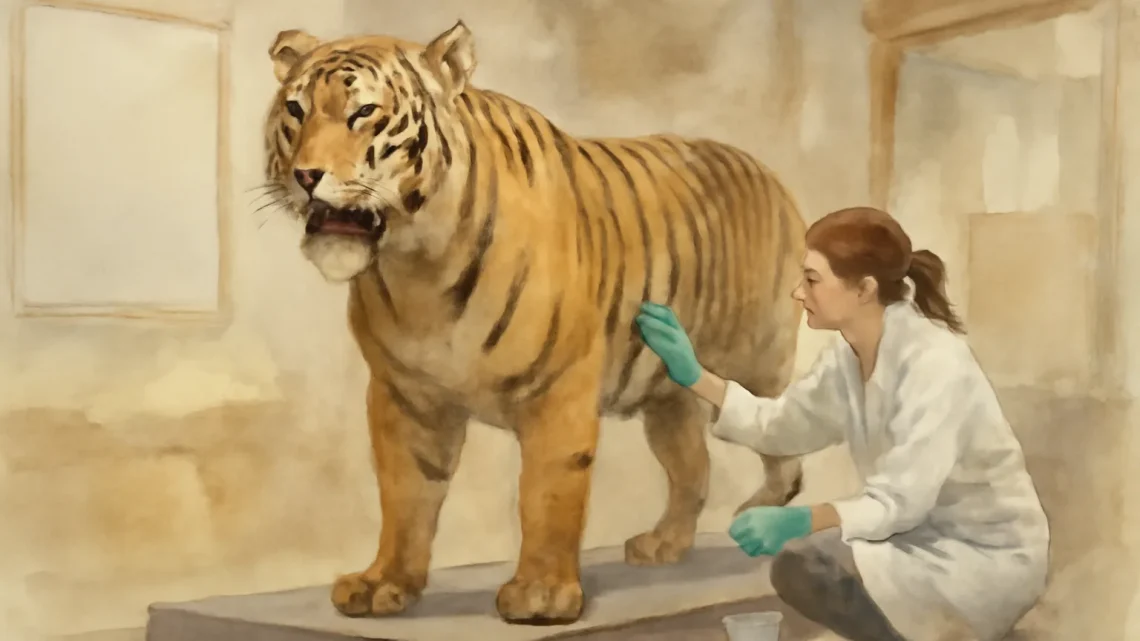
The iconic Bengal tiger, known as the Leeds Tiger, has undergone detailed conservation work as part of ongoing efforts to preserve some of the most significant natural history exhibits at Leeds City Museum. The tiger, a taxidermy mount believed to be one of the largest of its kind worldwide, has been a fixture at the museum for over 160 years.
Background of the Leeds Tiger
The tiger was originally shot in 1860 in the foothills of the Himalayas by Major-General Sir Charles Reid, who described it as the largest tiger he had ever seen, measuring more than 12 feet in length. Its pelt was brought to the UK and displayed at the London International Exhibition before being acquired by Leeds industrialist William Gott in 1862. Gott commissioned taxidermist Edwin Henry Ward to mount the specimen, which was then exhibited by the Leeds Philosophical and Literary Society and described as “unequalled in Europe.”
Conservation Process
Curators Clare Brown and Sarah Burhouse conducted meticulous checks for dust and pests, which can damage vintage taxidermy. The conservation work involved cleaning and monitoring the condition of the tiger and other rare specimens in the museum’s Life on Earth Gallery.
Other Specimens Under Conservation
- Huia bird feathers: The museum holds a rare pair of tail feathers from the Huia, an extinct bird species from New Zealand. The feathers hold cultural significance for the Māori people and were historically worn by individuals of high status.
- Giant panda “Grandma”: This panda was the first live giant panda to arrive in the UK in 1938 but died shortly after due to illness.
Significance of the Collection
Clare Brown, curator of natural sciences, explained that many taxidermy mounts date from the late 19th and early 20th centuries and require regular monitoring to prevent damage from pests, dust, and drying. These specimens represent animals from diverse habitats and highlight the impact of human activity on wildlife populations.
Brown emphasised the educational and research value of the collection, noting that it provides insights into past biodiversity and informs efforts to protect vulnerable species in the future.
Life on Earth Gallery
The Life on Earth Gallery features an extensive collection including a polar bear, turtle, sea lion, Tibetan yak, and the skeleton of a bluefin tuna. The exhibits are displayed alongside information about the climate emergency and the natural history of the specimens.
Local Authority Comments
Councillor Salma Arif, Leeds City Council’s executive member for economy, highlighted the uniqueness of the museum’s collection and the importance of the conservation work carried out by museum staff to ensure the exhibits remain accessible and informative for future generations.
Visitor Information
Leeds City Museum operates as a “Give What You Can” venue, encouraging visitors to support the museum through voluntary donations. Payment options include contactless, Chip and Pin, cash, and coins at donation points within the museum.
More information about visiting the museum can be found on the Leeds City Museum website.