Ancient Bronze Age Burial Site Unearthed in Leeds
June 1, 2026Discoveries shed light on early communities in Drighlington
Archaeological investigations at a housing development site in Drighlington, Leeds, have revealed significant Bronze Age funeral remains and artefacts, dating back approximately 4,000 years. The findings provide valuable insights into the burial practices and social structures of some of the city’s earliest inhabitants.
Excavation details and findings
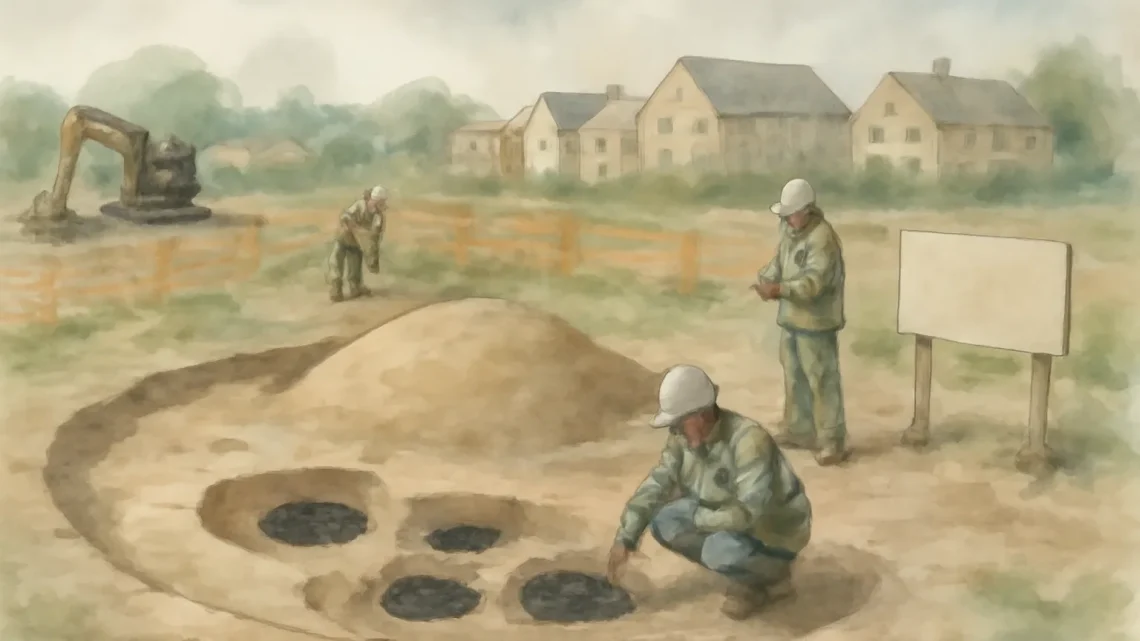
The site at Pitty Close Farm was excavated beginning in 2020 by Archaeological Services WYAS during preparatory works for new housing. The dig uncovered part of a barrow, an ancient circular burial mound constructed from earth and stone, often featuring a surrounding ring ditch.
Within an area of about two square metres, archaeologists found four cremation pits containing charcoal and the remains of three adults and one child aged between nine and twelve years. Radiocarbon dating places the earliest cremation between 1889 and 1701 BC.
Artefacts and their significance
- A decorated clay collared urn, featuring a twisted cord impression and a pattern possibly made with a cow-rib spatula, was found containing the remains of one individual.
- A finely carved pin made from animal bone.
- The blade of a flint knife, notable for its delicate honing and the fact that the flint material is uncommon in the area, suggesting it was a valued possession.
The pin and knife were found burned as part of the funeral pyre, indicating they were likely grave goods accompanying the deceased. The presence of these items suggests the individual may have held a high status within Early Bronze Age society.
Historical context and community significance
The Early Bronze Age marks a period when cremation, urn burials, and the construction of barrows became more prevalent, coinciding with the establishment of more permanent settlements. These burial sites likely served as important communal landmarks, reinforcing connections to the land and heritage across generations.
Preservation and future access
The human remains and artefacts are now housed at Leeds Discovery Centre, a facility dedicated to the storage and study of archaeological archives from across the Leeds Metropolitan District. The urn, pin, and knife are planned to be displayed to the public later in the year alongside other recently acquired collections.
Leeds Discovery Centre also offers pre-booked tours for visitors and operates on a donation basis to support its work. The centre aims to provide educational opportunities and promote ongoing research into the city’s rich history.
Statements from experts
David Williams, manager of the West Yorkshire Archaeology Advisory Service, highlighted the importance of developer-funded archaeology in preserving such sites, noting that without the planning process, the prehistoric monument would have been lost.
Leeds Museums and Galleries’ curator of archaeology commented on the discovery’s value in understanding Early Bronze Age communities and their burial customs, emphasising the communal effort involved in creating these monuments.
Further information
For details on visiting Leeds Discovery Centre and viewing the upcoming displays, please visit the official Leeds Museums and Galleries website.