Restoration Reveals Leeds Grand Theatre’s Original Victorian Design
May 27, 2026Exploring the heritage and craftsmanship behind a historic venue
Leeds Grand Theatre, built in 1878, has undergone extensive restoration work in recent years to preserve its original decorative schemes and architectural features. The project, involving heritage specialists and craftspeople, aims to maintain the theatre’s Victorian character by carefully researching and reinstating its authentic colours and materials.
Rediscovering original colour schemes
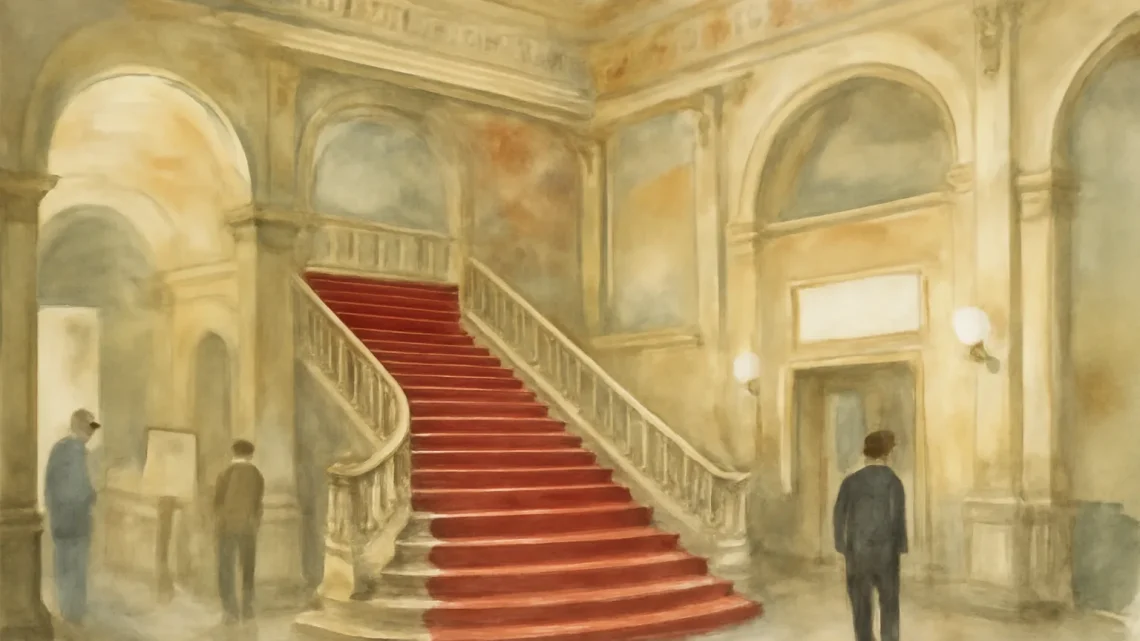
Between 2020 and 2022, a focused programme documented and restored the Front of House colour schemes. Specialist decorator George Bogojevic worked alongside conservators to unify decorative finishes and uncover the theatre’s initial artistic intent. Early efforts concentrated on the main staircase, where repairs and redecorations used historically accurate colours to restore elements such as the glass lantern, cornicing, and barrel ceiling.
By 2022, attention shifted to the main foyer. Detailed paint analysis and archival research revealed that the original colour scheme featured rich red tones, contrasting with the green finishes that had been applied in later years. Small details, including delicate metallic pinstripes around mirror arches, were reinstated using historic British Standard colour charts, enhancing the space’s Victorian elegance.
Craftsmanship in restoration
Restoration work has emphasised both conservation and skilled craftsmanship. In 2021, the stage curtain was carefully restored by repairing tears, stabilising its surface, and cleaning and retouching the painted design. Due to the inability of modern paints to replicate aged colours, each tone was hand-matched to preserve the curtain’s historical character without over-restoration.
Further work included the 2024 installation of bespoke wallpaper in the Dress Circle boxes, inspired by Gothic designs from 19th-century architect Augustus Welby Northmore Pugin. By 2025, rare Lincrusta wall plaques dating from around 1890 on the main staircase were restored, with authentic colours applied to highlight intricate architectural details.
Historic materials and design innovation
The theatre’s walls feature materials that reflect changing styles and technological innovation. Lincrusta-Walton, a luxury embossed wallcovering first produced in 1877, was used extensively for its durability and sculptural detail. Tynecastle canvas panels, developed in the 1880s and inspired by European leather hangings, also contribute to the theatre’s distinctive interior, having been used in prestigious settings such as ocean liners and yachts.
Recent restorations continue this tradition. For example, Bar 1878 features the Lincrusta ‘Fanfare’ design, which draws on 1920s Art Deco influences. Archival research has also uncovered original designs for the Dress Circle Bar, including Sanderson ‘Teazel’ wallpaper with gold leaf embellishment. These elements collectively narrate a story of Victorian innovation, early modern design, and ongoing conservation.
Source
Information sourced from Leeds Heritage Theatres.