Puppetry’s Role in Leeds Heritage Theatres’ History
August 10, 2026Exploring Puppetry at Leeds Heritage Theatres
Puppetry has been a notable form of entertainment at Leeds Heritage Theatres, with a rich history that reflects the broader evolution of the art form. From ancient origins to contemporary performances, puppetry continues to hold a place on the stages of Leeds, including City Varieties Music Hall, The Grand Theatre, and Hyde Park Picture House.
A Brief History of Puppetry
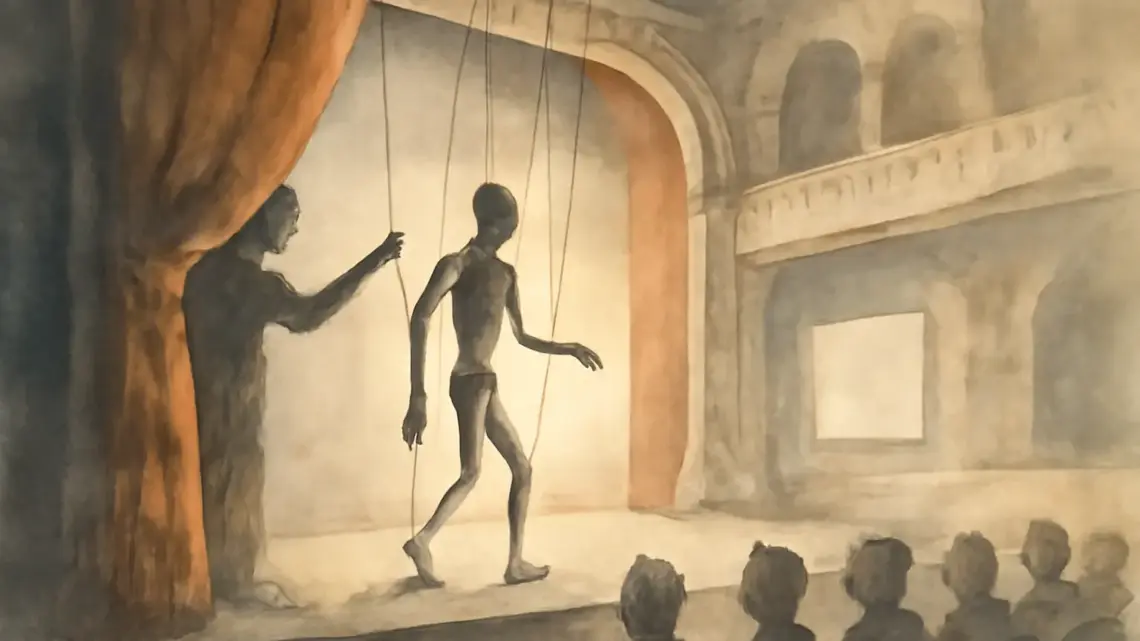
The history of puppetry extends far beyond the 159 years of City Varieties Music Hall. Early references to puppets date back to Ancient Greece, with mentions by Aristotle and Plato. Archaeological findings suggest that dolls discovered in Greece were used as marionettes—puppets controlled by strings. Puppetry was also present in ancient Egypt, likely for religious purposes, and shadow puppetry in China is believed to be around 3,000 years old.
The term ‘puppet’ derives from the Latin word ‘puppis’, meaning ‘little girl’. Puppetry faced bans in England during Cromwell’s era but regained popularity during the Restoration period. Modern theatre continues to embrace puppetry, with productions such as the West End’s The Lion King and shows like Avenue Q and various Muppet films demonstrating its ongoing appeal.
Marionettes at City Varieties
City Varieties Music Hall has hosted numerous marionette performances, including the renowned Mumford Puppets. Created by Frank and Maisie Mumford, this show was known for its glamorous style, comparable to cabaret rather than traditional children’s puppet shows. One of the most famous puppets from their act was Madamoiselle Zizi, described by the Manchester Evening News as “sex appeal on strings.”
Madamoiselle Zizi was notable for her stage presence and was reportedly an inspiration for the character Miss Penelope in the 1960s TV show Thunderbirds. The puppet was even banned at the Birmingham Hippodrome for kissing men in the audience. Frank Mumford continued to perform solo after Maisie’s death in 1984, with his final performance at City Varieties in 2004.
Children’s Puppetry at Leeds
City Varieties has also featured famous children’s puppets such as Sooty and Basil Brush. Sooty, a yellow glove puppet bear created by Harry Corbett in 1948, appeared at The Varieties from 1957. Sooty has become an icon of children’s entertainment, recognised with an OBE and holding a Guinness World Record for the longest-running children’s TV programme.
Basil Brush, a mischievous puppet fox, has been part of children’s comedy for nearly 60 years. The character was portrayed by Ivan Owen for 48 years, who remained anonymous to preserve the puppet’s magic. Basil Brush headlined the final edition of The Good Old Days at City Varieties in 2022.
Varied Puppetry Performances
Ventriloquism has been a common form of puppetry on Leeds stages, with performers such as Neville King, Andrew Newton, and Sir Ken Dodd showcasing this art. Leeds has also hosted more unconventional acts, including the Australian comedy-art performance Puppetry of the Penis, which features genital contortions and full frontal nudity, illustrating the diverse range of puppetry styles presented.
Modern Puppetry and Large-Scale Productions
Recent years have seen puppetry thrive in productions at Leeds Heritage Theatres. The annual Rock ‘n’ Roll Panto at The Varieties often includes puppets representing talking animals and magical creatures. Comedians like Nina Conti and Randy Feltface have incorporated puppetry into their acts.
At The Grand Theatre, Northern Ballet’s Merlin featured a large puppet dragon, complete with smoke effects. The National Theatre’s productions of Life of Pi and War Horse have also been staged in Leeds, showcasing large-scale puppetry. Life of Pi includes a Royal Bengal tiger puppet operated by two puppeteers, while War Horse features the horse Joey, brought to life by three puppeteers working in unison.
Puppetry on Screen
Hyde Park Picture House is currently screening No Strings On Me: Cinema’s Living Puppet, a season highlighting puppetry in cinema. The programme includes films such as The NeverEnding Story, Alice, and Return to Oz, offering audiences insight into puppetry before the digital era.
Conclusion
The history and ongoing presence of puppetry at Leeds Heritage Theatres demonstrate the art form’s lasting cultural significance. From ancient origins to modern theatrical spectacles and cinema, puppetry remains a dynamic and evolving medium of entertainment in Leeds.
Source: Leeds Heritage Theatres, Puppetry at Leeds Heritage Theatres